blog
PVYai Memory & Session Management - Cross Domains
PVYai sets again the Bar for holistic AI Implementation higher and introduce PVYai Memory.
By default, LLMs, regardless which Vendor you take, closed Source like Anthropic or OpenAI or their outpacing Rivals from the Open Source World, they all have something in common. No Memory - not like us Humans.
While there are several Solutions for adaptive Memory on the Market, closed source or Opensource, they all have their Flaws, which sooner or later corrupts the memory or leads to inconsistence Memory, not updated and maintained. The other Problem these Solutions having is the fact, it works only for an particular User or bonded to an Particular LLM Model.
But that's not how Memory for AI shall work.
Thats why we made PVYai Memory and PVYai Sentinel
The SysAdmin of the Organization can enable or disable it in the Adminiration Panel.
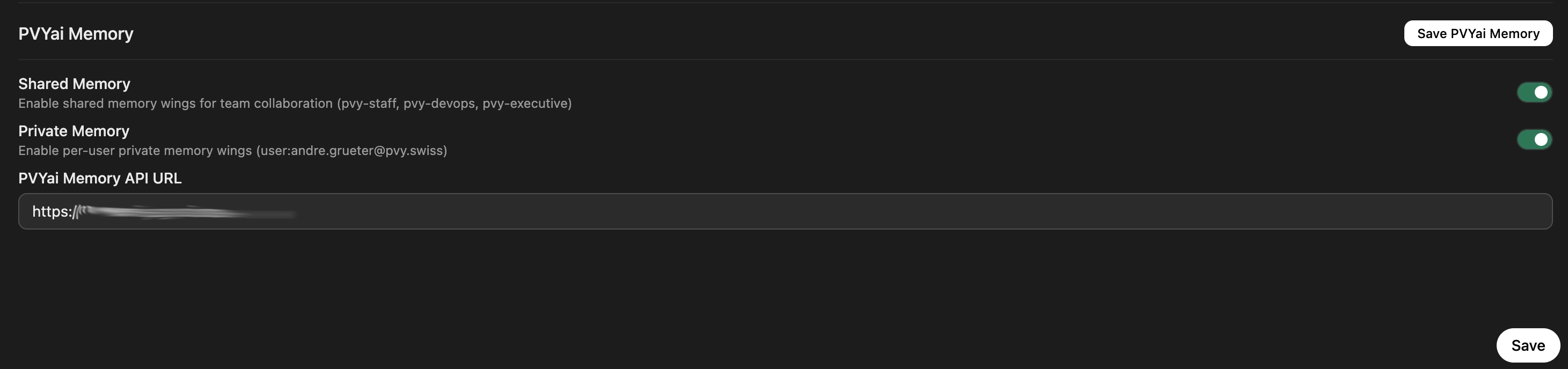
It allows your PVYai Model to write important things summarized into the PVYai Memory, and make this not only available cross Sessions, but also cross endpoints and accross other PVYai user from the same Group or Departement. This leverage not only interdisciplinary work accross teams, it also protects organizations own knowledge, even accelerated by AI and persists on team changes.
Cross Domain / Departement Shared Memory
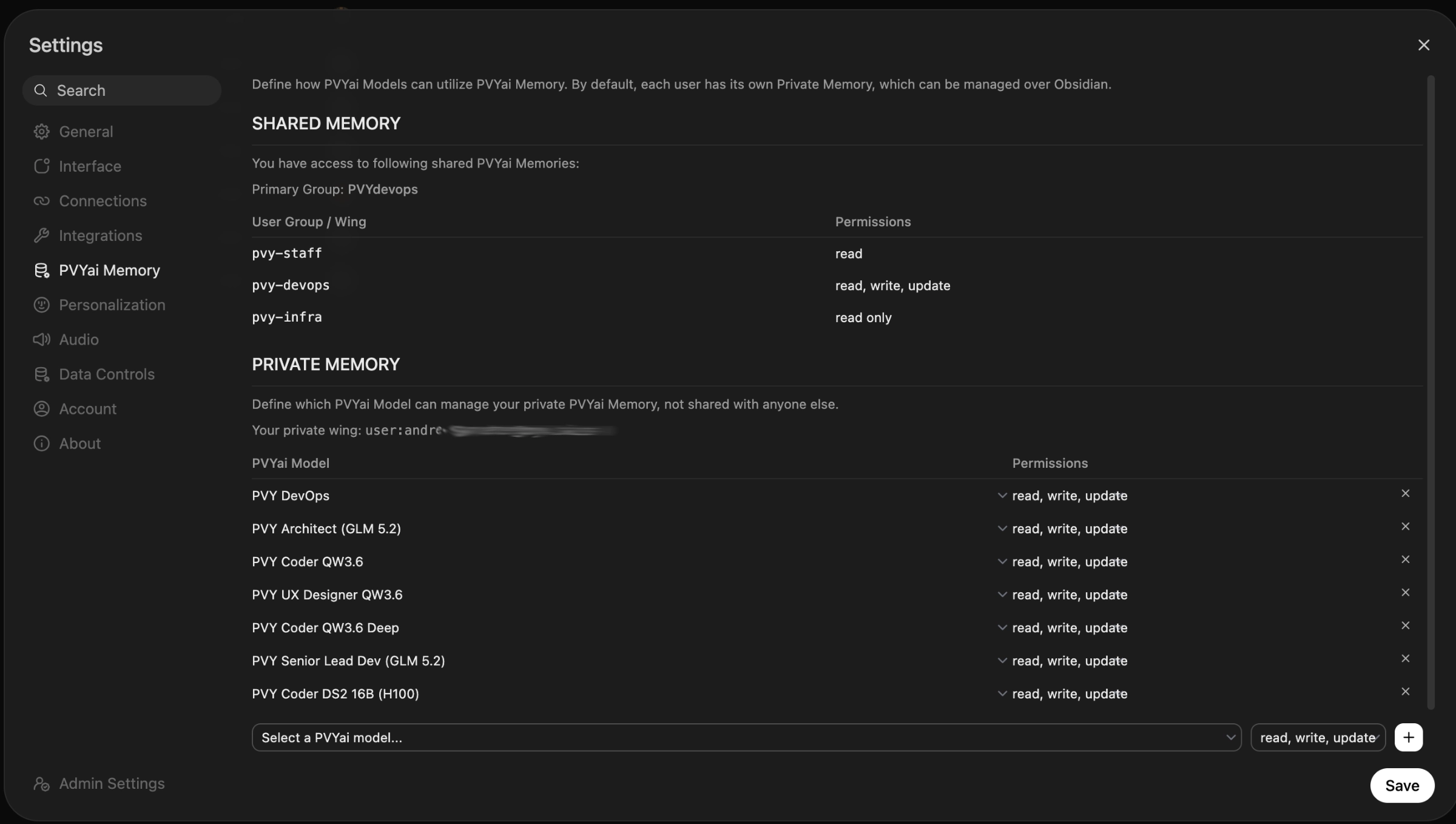
Its called PVYai Shared Memory, and it comes with ACL Permissions, and also the Option, that Users can be part of more than one User Group and PVYai shared Memory, but they Interactions with PVYai Models only updates the Memory of his primary User Group by default, but his LLM can Pull relevant Information from another User Groups Brain, to accomplish or verify a Task but update or write new Memory Context to it. User can any time say: Lets sum up this and put it to another Shared Memory Wing.
It also automatically interlinks impact driven Memory notes, with other User Groups (Departements/Job Roles) for example, if a ADR on the Developer Shared Memory impacts the DevOps Teams, its creating a note in Reference to the Developer entry note, so LLM can see that.
Private Memory for each User
In addition, each PVYai User gets his own "Private Memory" where all his PVYai Models he works with, can read, update or write new Memories, but he has the choice to restrict the access to his Private Memory PVYai Model wise, and permission wise.
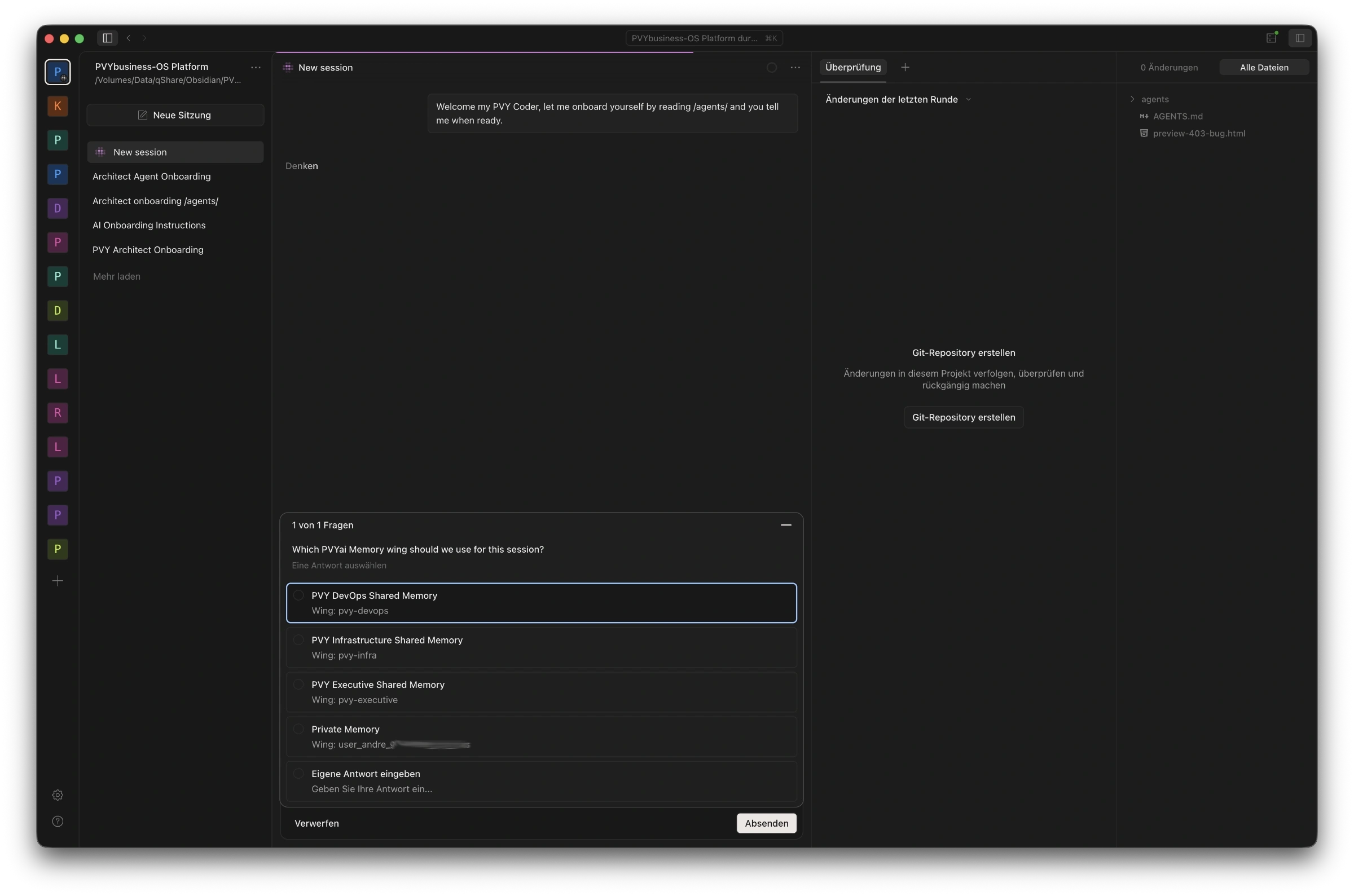
Works on any API Endpoint
Thanks to our Unified SSE API (OpenAI API compatible) it works not only in OpenCode Desktop, PVYbusiness OS or PVYai Agent. It works on any Application which offers an "OpenAI API" compatible API" which became the "Defacto" Industry-Standard.
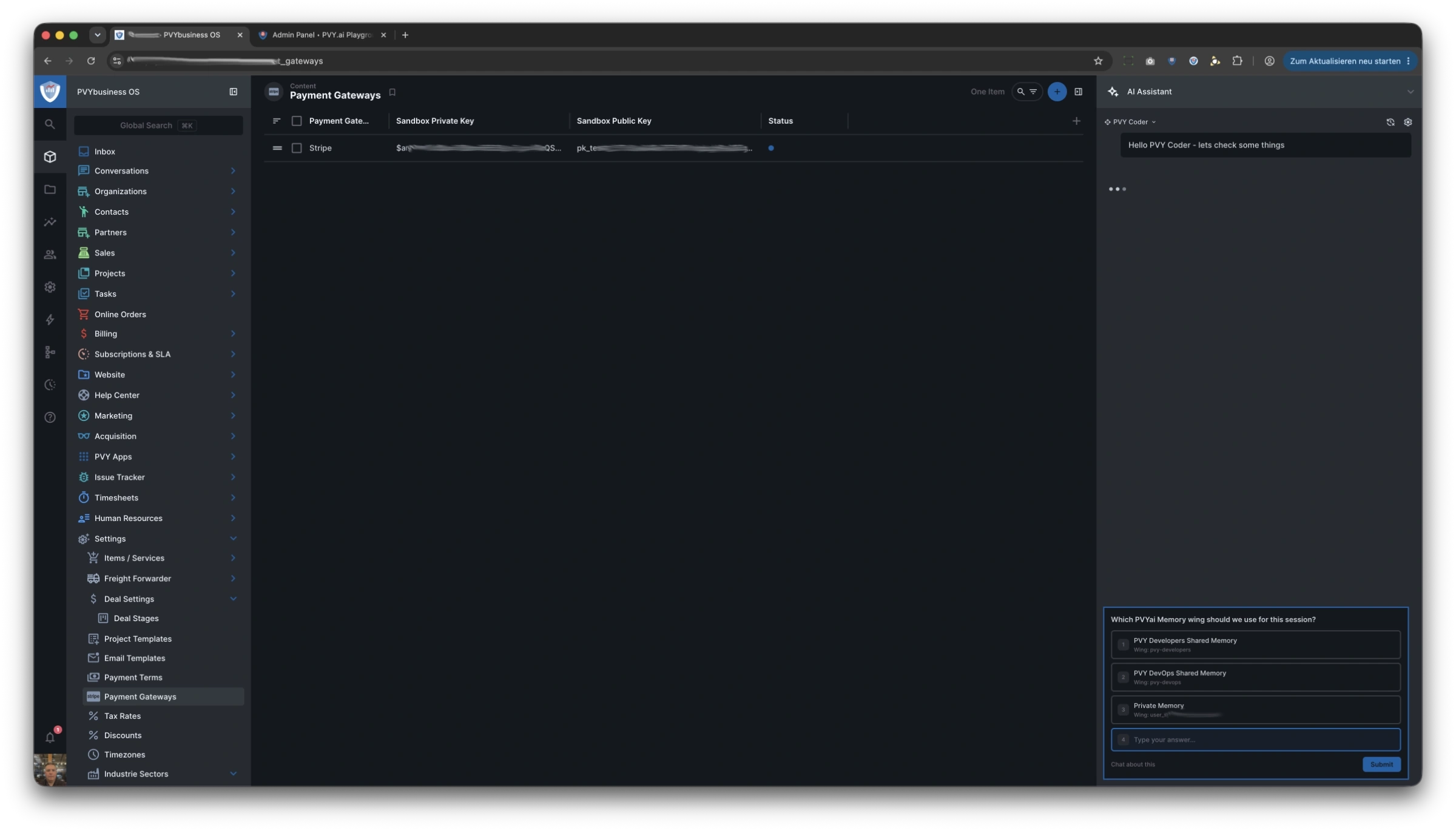
If the Question / Ask_Tool is being natively supported from the Endpoint, the Question comes with 0 Miliseconds Delay after the User is opening a new Chat/Session. If its UI wise not supported, the Question will be inserted by Text and the Answer remains cached for this particular session, to which PVYai Memory Wing the users and the LLM shall write ADR, Findings, or a Session Handover.
Yes it can manange Session Handover too. Thats pretty awesome. And it works also on normal /chat-complete Endpoints.
Its pretty cool if you can make a token-saving db schema query on a backend Application, creating a Memory Note into, in this Example, to PVYai Development Sharead Memory, open OpenCode Desktop, recall a for a few tokens this Memory Note with your PVYai Frontend Developer and he has everything what is needed, to perform the implementation on the Frontend:
Native Function Call Support & CLI Reference
Users can anytime retrieve made Decisions, Memory Notes or a LLM Diary (Yes they have also a Diary) where they have ALC wise access to, means minimum read access on Shared Memories, and for sure their own Private Memories. by using one of 35 Commands, including a Graph Visualization. All Commands and Explanations are reachable by /help-memory.
PVYai Sentinel
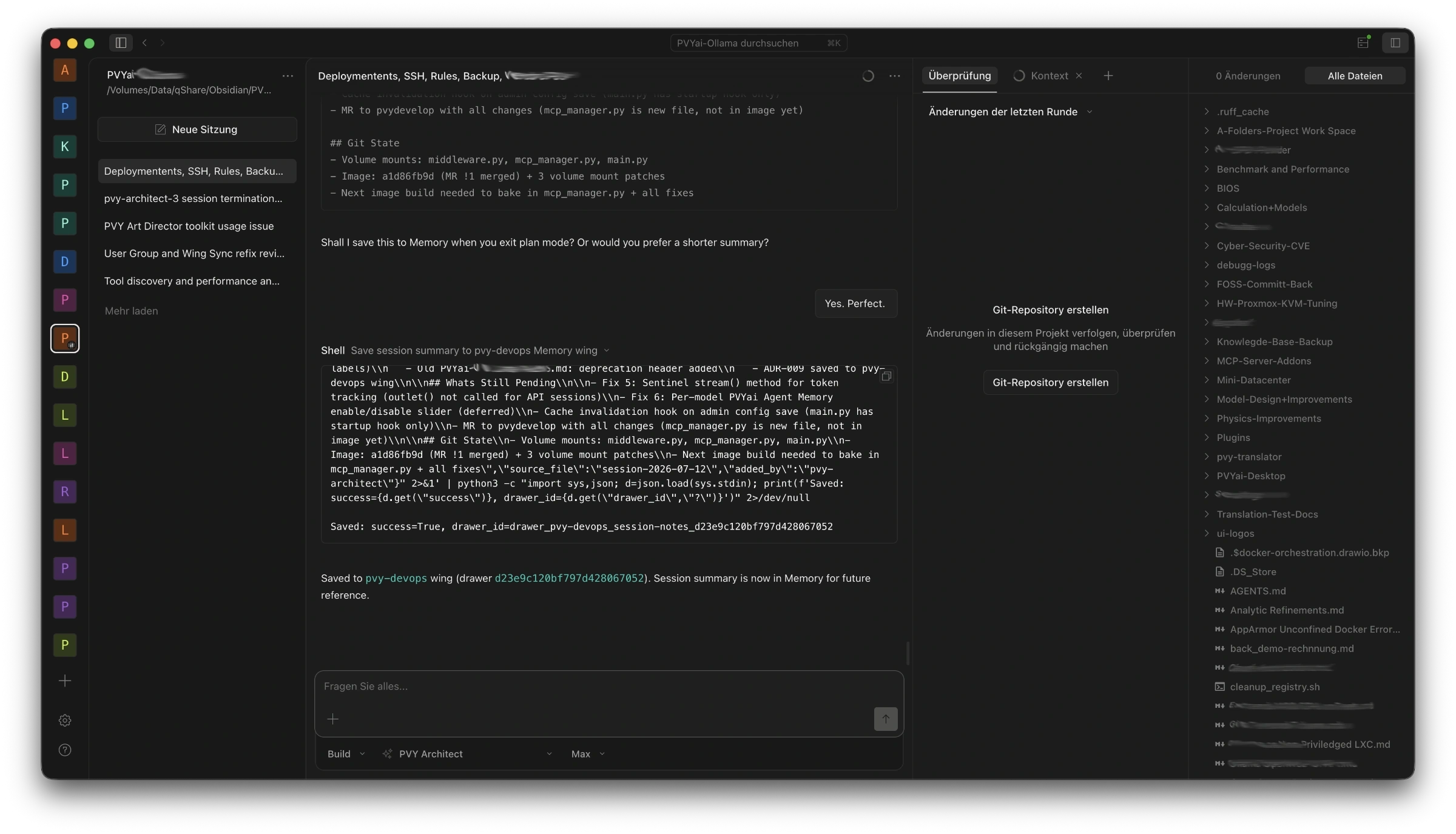
Cautioned, Precise Watcher of each User Interaction, he defines not only, if a particular tasks in a current session shall be hand-overed to another PVYai Model, which has Benchmark wise a higher Skill Set, he also reminds both user and LLM, to summarize some findings or results into PVYai Memory and controlls this.
Also on a later point of the current or a newer Session, if changes made to a Management Decision, a System Architect or how Code got implemented, which has made in past, it will update its Memory with the newest valid decision made, mark the previously one as obselete with reference to the new valid one. And he also iniate the Session Handover (User can do too) if his Intelligence sees that the current session quality is on the brink:
Does it scale ?
PVYai Memory is a core component of PVYai, seamlessly integrated to provide zero-latency performance across our unified SSE API and hybrid chat/complete endpoints. Its scalable service architecture and storage can be clustered for individual customers using Kubernetes/Docker or bare-metal deployments with systemd and standard load balancers.
How about Memory Pollution?
When a user creates a Memory Note, PVYai Sentinel automatically reviews it. If the note is deemed irrelevant to the Shared Domain Memory Group, PVYai Sentinel informs the active LLM. The LLM then suggests saving the note in the user's Private Memory, allowing the user to access it later if needed.
Users can request updates from the LLM regarding project milestones (including non-coding tasks). The LLM efficiently searches its internal structure and updates or references relevant information.
We’ve also developed a useful tool to complement the commands, creating separate versions for both regular users and system administrators. On your Desktop. However, that’s a topic for another time.